
The Instinct of Total Protection
As parents, our primary reflex is to protect our children from any kind of pain, suffering, and fear. This is deeply rooted in our evolutionary makeup. We turn off exciting movies, skip dark passages in books, and try to make the child's world as pink and soft as possible.
But beware: Developmental psychology warns against "helicopter censorship." A world completely sterilized of threats does not create courageous children. It produces anxious adults.
Why "Evil" Exists in Fairy Tales
For millennia, humans have told their children campfire stories of wolves, witches, monsters, and ghosts. This isn't sadism – it's pure psychological survival training.
In fairy tales, dragons and witches represent real, inner fears of the child: fear of abandonment, fear of the dark, or of strangers. Through the story, the child's brain learns within the extremely safe environment of the parents (snuggled warmly on their lap): The horror is real. But good wins. The hero overcomes the fear.
Dosed Danger: The "Tension Curve" of Gugu
A child must practice processing fears. However, classic Grimm's fairy tales (like pushing Hansel and Gretel into an oven) are often too intense for a modern 4-year-old's mind.
That's exactly why Gugu's AI has a sophisticated tension monitoring system (guardrails). For an 8-year-old child, you can absolutely configure a "Ghost Town" world and assign the learning goal "Courage." The story becomes eerie and thrilling – and in the end, the child bravely overcomes the invisible poltergeist with a brilliant tactic.
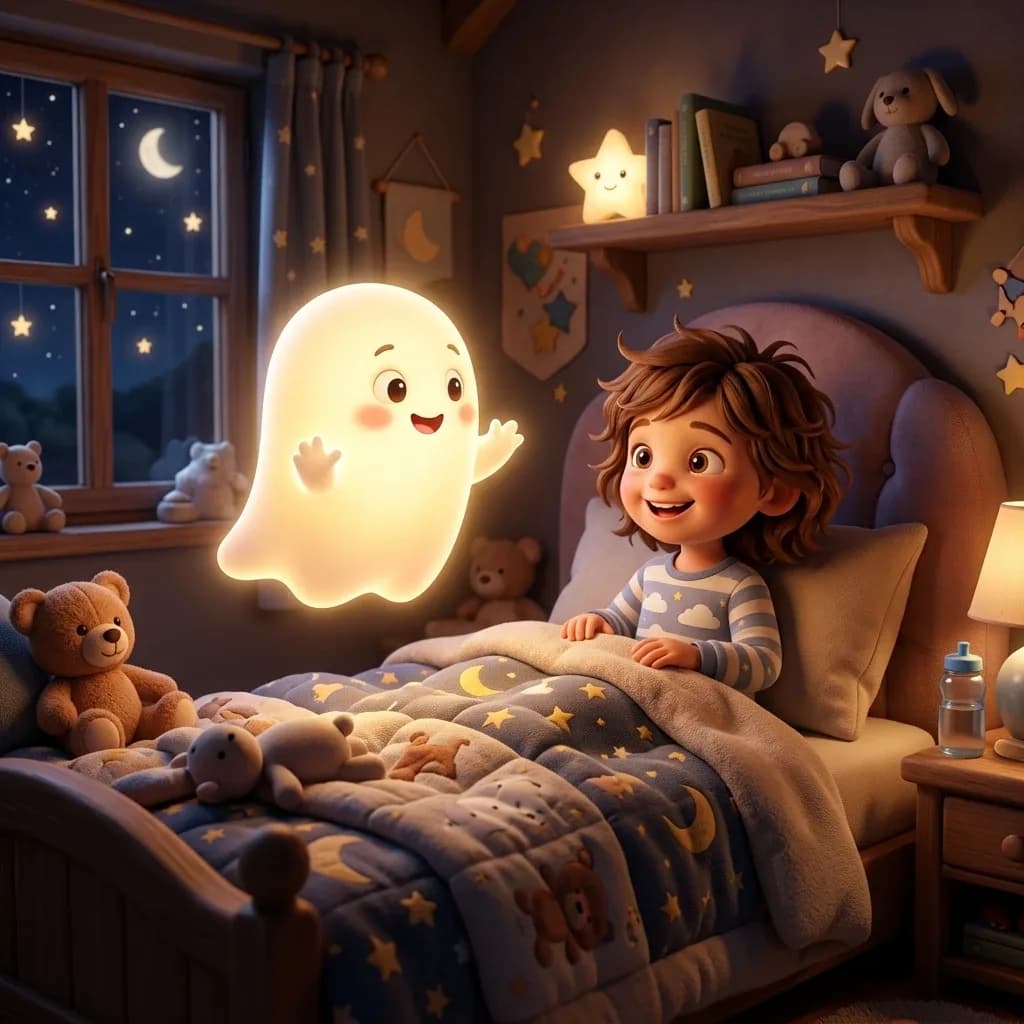
For a 3-year-old toddler, Gugu will take exactly the same prompt and generate a friendly ghost who just lost its sheet. It builds resilience without overwhelming them.
Let the monsters out of the closet – and defeat them together, comfortably from bed!
Scientific References and Sources
- Importance of Fairy Tales for Overcoming Fear: Bruno Bettelheim / The New York Times Book Review – The Uses of Enchantment (Classic psychoanalytic work showing how fairy tales and child-appropriate scary stories help children process unconscious fears and emotional conflicts safely).
- Resilience Through Exciting and Challenging Play: International Journal of Environmental Research and Public Health – What is the Relationship between Risky Outdoor Play and Health in Children? A Systematic Review (Systematic review on how controlled exposure to challenges and fear builds emotional coping and resilience).