
When the Evening Becomes a Challenge
Every second family knows it: brushing teeth ends in drama, pajamas allegedly bite, and when the light is finally off, the child suddenly gets extremely thirsty, needs to go to the bathroom again, or has "forgotten how to sleep."
Bedtime battles are completely normal. For children, falling asleep means a loss of control and separation from their parents. The solution? Constant, predictable routines that project safety and security.
Here are 5 proven steps for a peaceful evening routine:
1. The "Stimulus Brake" (1 hour before sleep)
As soon as dinner is finished, all screens should be turned off. The blue light from TVs or tablets inhibits the release of the sleep hormone melatonin. Switch to quiet activities instead: puzzles, building Legos, or listening to gentle music.
2. The Magical Transition (The 10-Minute Warning)
Children don't have a sense of time yet. An abrupt "Right, off to bed now!" violently pulls them out of their play. Better: An announcement.
"When the little hand is on the six, we'll put on our pajamas."
A small hourglass or a "tidy-up song" is even more playful.
3. Physical Closeness and "Blowing off Steam"
Many children need to release physical tension before falling asleep. A short, gentle massage, taking deep breaths together, or the classic "bear hug" helps the nervous system switch from "active" to "rest."
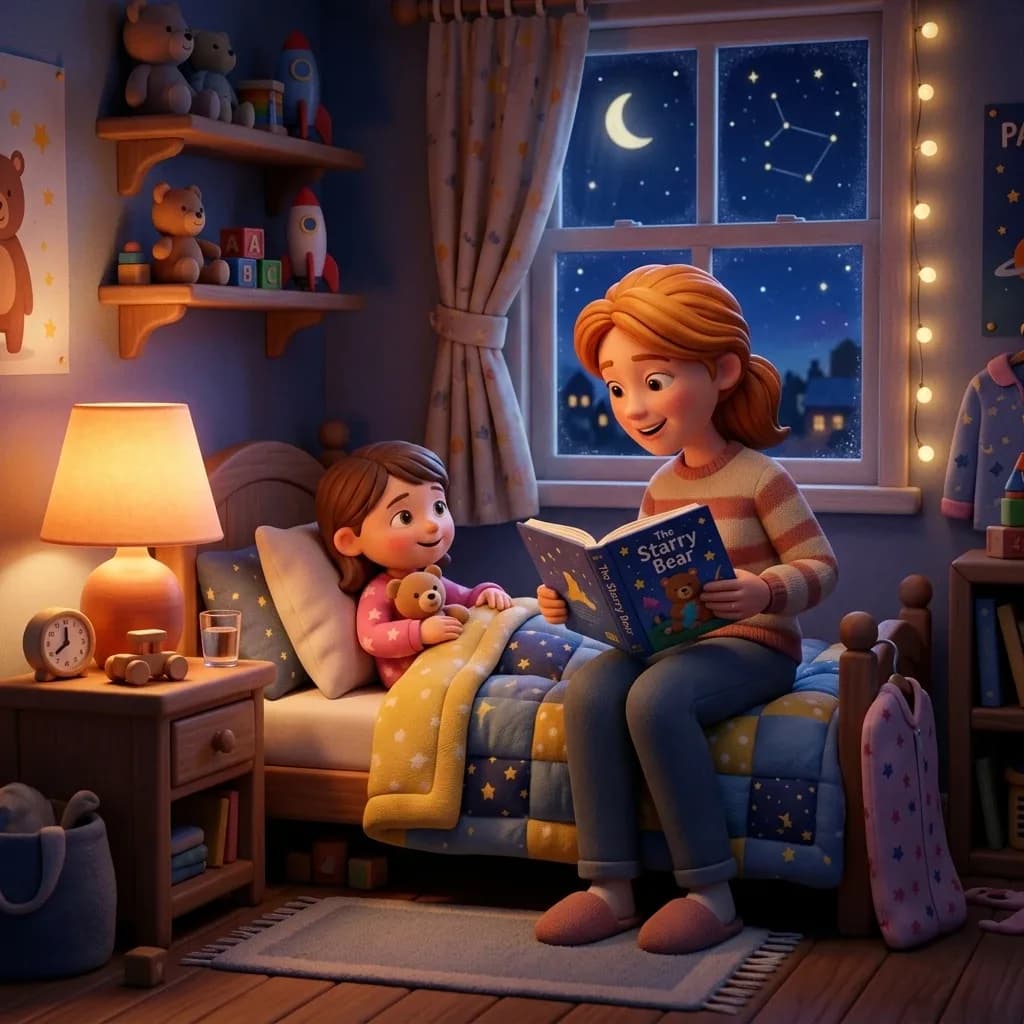
4. The Centerpiece: The Shared Story
Reading time is the psychological anchor of the evening. The familiar voice of parents demonstrably lowers the child's heart rate.
Tip: Let your child co-create the story! That's exactly why we developed Gugu. Instead of reading the same book every evening (which often tires parents), children can choose the theme on Gugu (e.g., "Space" or "Dinosaurs"). The AI then creates an ad-free audio or reading adventure in seconds, starring your child.
This gives the child the feeling of control back – an extremely effective remedy against bedtime defiance!
5. The Final Sentence
Always end the day with the same sentence. Whether it's "We love you to the moon and back", or a brief summary of the best thing about the day. This acoustic constant conditions the child's brain over weeks to the signal: The day is over, now I am safe.
Conclusion
A good evening routine takes time to work. Be kind to yourself if it doesn't work out sometimes. Routine beats perfection! If you feel like bringing a fresh breeze into your reading routine, test Gugu for free tonight.
Scientific References and Sources
- Impact of Blue Light on Melatonin: Harvard Medical School – Blue light has a dark side (Studies on melatonin suppression caused by high-energy blue light from digital screens).
- Deep Pressure and Nervous System (Proprioception): American Journal of Occupational Therapy – Effects of Deep Pressure Stimulation on Physiological Arousal (Research on the calming effect of Deep Pressure Stimulation on the parasympathetic nervous system).
- Impact of Reading/Storytelling on Heart Rate and Stress Reduction: Proceedings of the National Academy of Sciences (PNAS) – Physiological and psychological effects of storytelling in hospitalized children (Clinical studies demonstrating the reduction of heart rate and stress hormones like cortisol when children listen to stories).