
The Quick Grab for the Remote
After a long, exhausting day, the temptation is huge: the child is hyper, the parents are tired, and the TV show or YouTube video seems like the only way to quickly provide some quiet time.
But what is intended as relaxation often neurologically achieves the exact opposite.
Blue Light and Melatonin Deficiency
Screens on tablets, smartphones, and TVs emit a high amount of blue light. A child's eye absorbs this light particularly intensely. The brain gets the signal: It's broad daylight!
The vital release of melatonin (the sleep hormone) is drastically halted. The result: The child falls asleep worse and wakes up more frequently during the night.
The Sensory Overload of Moving Pictures
While adults switch off when watching a series, a child's brain runs at full speed with visual media. Fast cuts, glaring colors, and complex plotlines lead to cognitive overload. When the TV is finally turned off, the child isn't "relaxed," but wired (or whiny) because the brain couldn't process the flood of impressions.
The Solution: "Back to Listening"
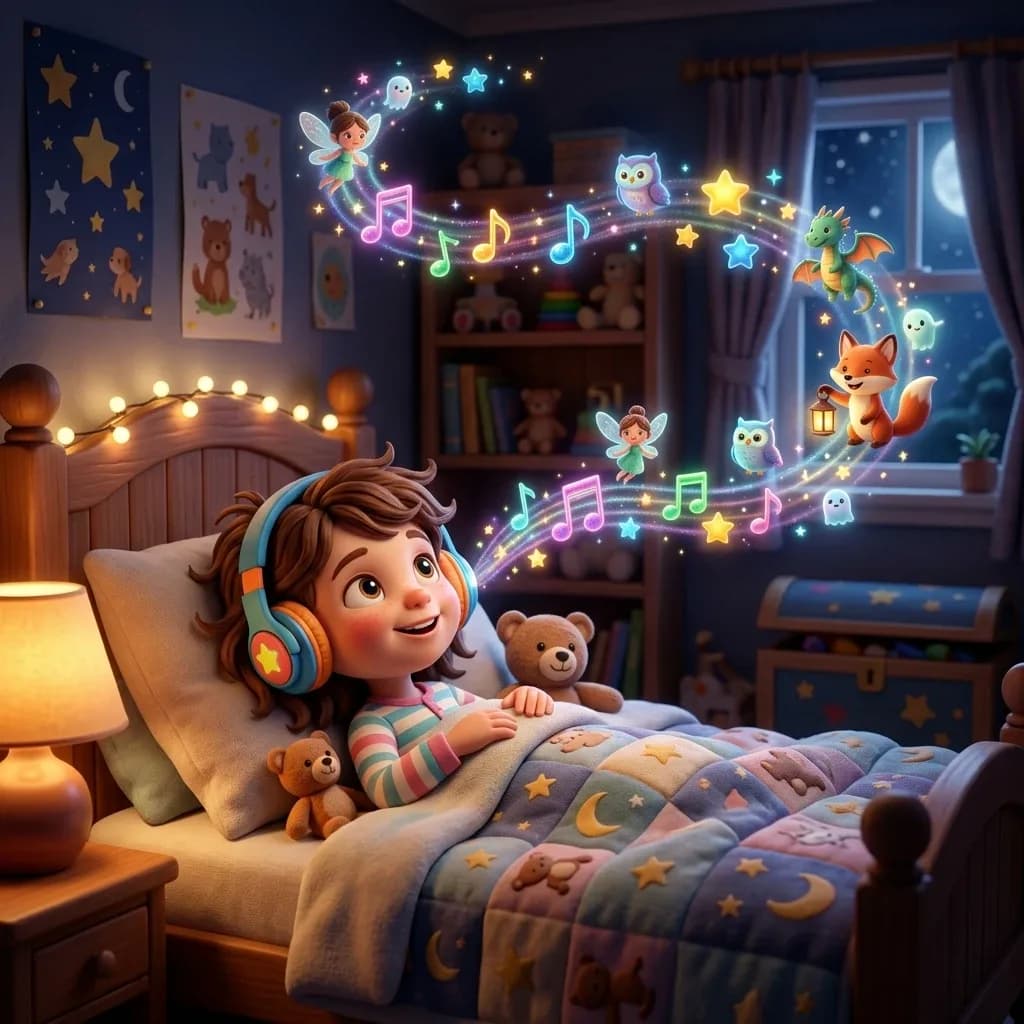
Switching from visual to auditory stimuli (reading aloud or audiobooks) is the ultimate "hack" for peaceful evenings.
Something magical happens when listening:
- The brain calms down: No fast picture changes, just a constant auditory stimulus.
- Their own imagination works: The child has to create the pictures in their own head. This happens at the child's pace and almost always leads to a drowsy state.
- Physical rest: While listening, the child can already lie in the darkened room with their eyes closed.
Audio in the Gugu App
This is exactly where Gugu comes in. All of our AI-generated stories are primarily designed as an audio experience or for reading aloud. If your child still demands "action" in the evening, don't give them a screen, start a space adventure as an audio story in Gugu. The child gets their adventure in their head – and you get a tired child whose eyes haven't been flashed by LEDs.
Scientific References and Sources
- Impact of Blue Light on Melatonin: Harvard Medical School – Blue light has a dark side (Studies on melatonin suppression caused by high-energy blue light from digital screens).
- Link Between Screen Use and Sleep Disruption: Brigham and Women's Hospital / Harvard Medical School – Evening use of light-emitting e-readers (Clinical study on the effects of light-emitting screens before bedtime on sleep latency, melatonin secretion, and REM sleep phases).